
· News
Beethoven at Tage Alter Musik Regensburg 2027
On Whit Sunday, 16 May 2027, we bring an all-Beethoven programme, with Anders Muskens at an 1806 Broadwood fortepiano, to one of Europe’s great early music festivals.
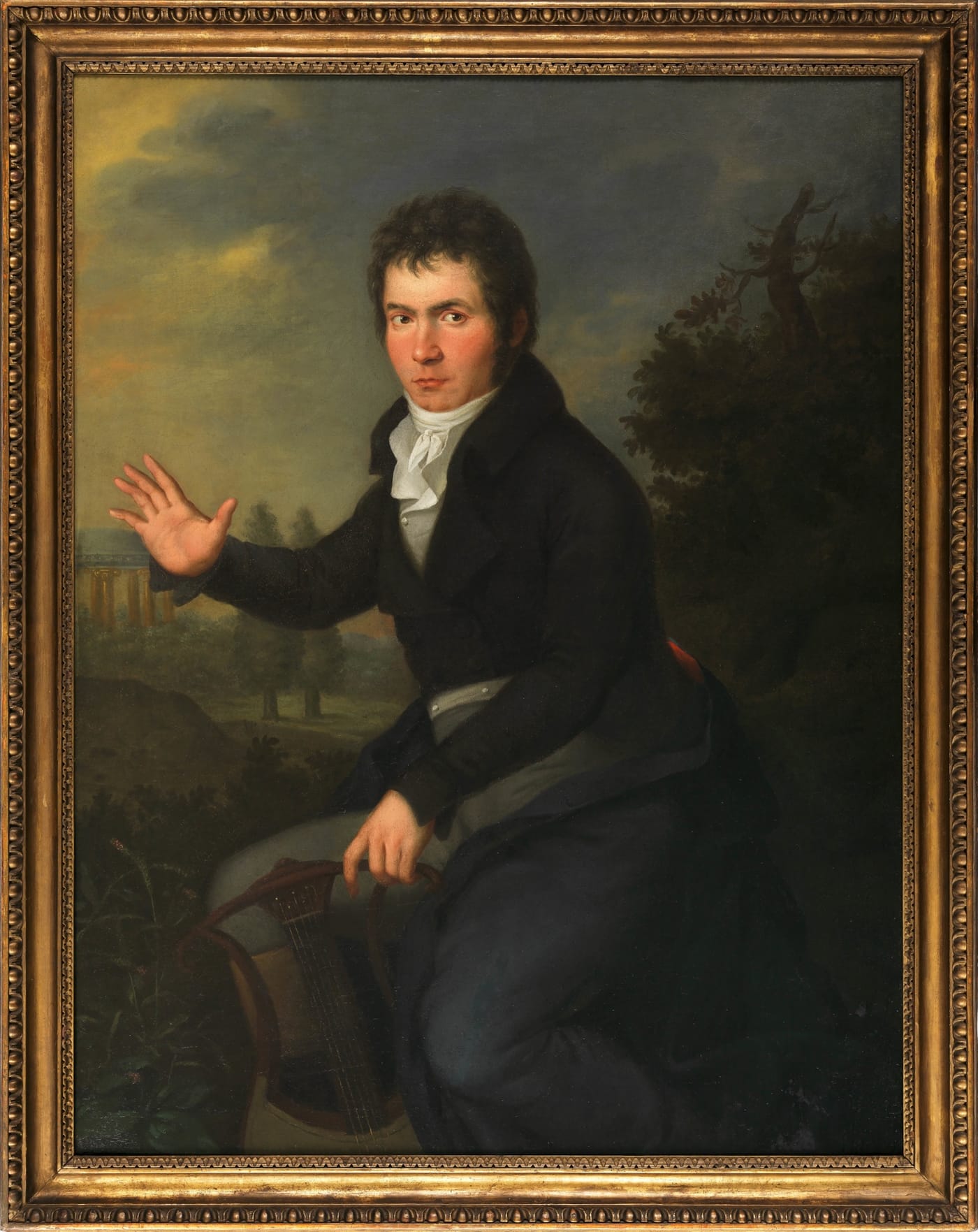
We are delighted to announce that Das Neue Mannheimer Orchester will appear at Tage Alter Musik Regensburg on Sunday, 16 May 2027, with an all-Beethoven programme in the Dreieinigkeitskirche. The concert is directed by our founder and artistic director Anders Muskens, who will also be the soloist on an original fortepiano.
The festival
Each year at Whitsun, the medieval centre of Regensburg, a UNESCO World Heritage Site, fills with music. Tage Alter Musik was founded in 1984 by three Regensburg musicians, Stephan Schmid, Ludwig Hartmann and Christof Hartmann. It started as three days and five concerts and is now regarded as one of the most important early music festivals in Europe. Over the Whitsun weekend, ensembles from around the world perform music from the Middle Ages to the early Romantic era in the city’s historic churches and halls. Many of today’s leading period-instrument ensembles made their first important appearances in Germany at this festival. In 2027, Whit Sunday falls on 16 May, so our concert takes place at the very heart of the festival weekend.
Our venue, the Dreieinigkeitskirche (Church of the Holy Trinity), was built between 1627 and 1631, during the Thirty Years’ War. It was one of the first Protestant churches built in Bavaria, and its great barrel-vaulted hall is one of the festival’s best-loved spaces.
The programme: Beethoven in 1807
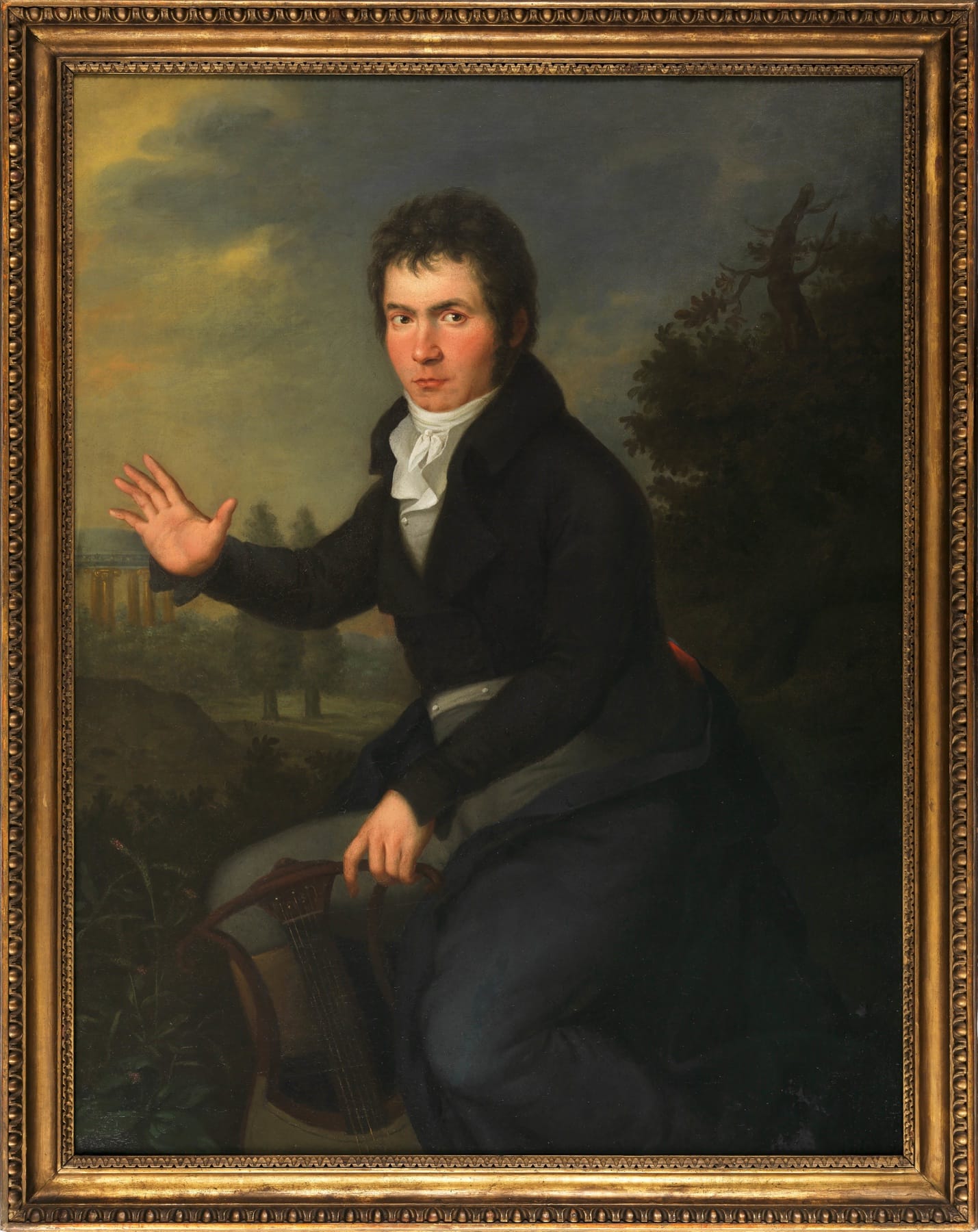
Ludwig van Beethoven (1770–1827) wrote all three works on our programme within a few years of each other, in the confident middle years after the Eroica Symphony.
Coriolan Overture, Op. 62
Beethoven wrote Coriolan in 1807 for Heinrich Joseph von Collin’s tragedy about the Roman general who turns against his own city. It was first heard in March of that year at the palace of Prince Lobkowitz in Vienna. The overture sets hammering C-minor chords against a pleading second theme and ends with music that simply falls apart into silence. It is one of the most compressed and dramatic pieces Beethoven ever wrote.
Piano Sonata in C major, Op. 53, “Waldstein”
The Waldstein Sonata dates from 1803–04 and is dedicated to Count Ferdinand von Waldstein, one of Beethoven’s first patrons in Bonn. Beethoven wrote it shortly after he received a new French piano from Érard with a larger range. Its rippling textures, wide registers and long pedal effects test the instrument as much as the player. On a fortepiano of the period, these effects sound much as Beethoven intended: transparent, full of colour, and genuinely daring.
Piano Concerto in D major, Op. 61a
Beethoven’s Violin Concerto was first performed by Franz Clement at the Theater an der Wien on 23 December 1806. Soon afterwards, the publisher and pianist Muzio Clementi asked Beethoven to arrange it for piano, and Beethoven completed the version known as Op. 61a in 1807. He dedicated it to Julie von Breuning, the young wife of his close friend Stephan von Breuning. For the first movement he wrote an unusual cadenza in which the timpani joins the soloist, something not found in the violin version. The piano version is rarely performed, and it gives a fresh view of a very familiar work.
An instrument from Beethoven’s world
Anders will play his original John Broadwood grand fortepiano of 1806, built in London in the same year the Violin Concerto was first performed. English grand pianos of this period have a sonorous, singing tone and a resonant bass, and they were highly valued across Europe. Playing this music on an instrument of its own time, with the orchestra on historical instruments, brings us closer to the sound Beethoven and his first audiences knew.
Concert details
Sunday, 16 May 2027 · 20:00
Dreieinigkeitskirche, Regensburg
Tage Alter Musik Regensburg
Das Neue Mannheimer Orchester
Anders Muskens, fortepiano & direction
Beethoven: Coriolan Overture, Op. 62
Beethoven: Piano Sonata in C major, Op. 53, “Waldstein”
Beethoven: Piano Concerto in D major, Op. 61a
We look forward to sharing this music with the Regensburg audience, and we hope to see you there!